

5 Ways to Make Your Home Feel Collected — Without Spending a Fortune
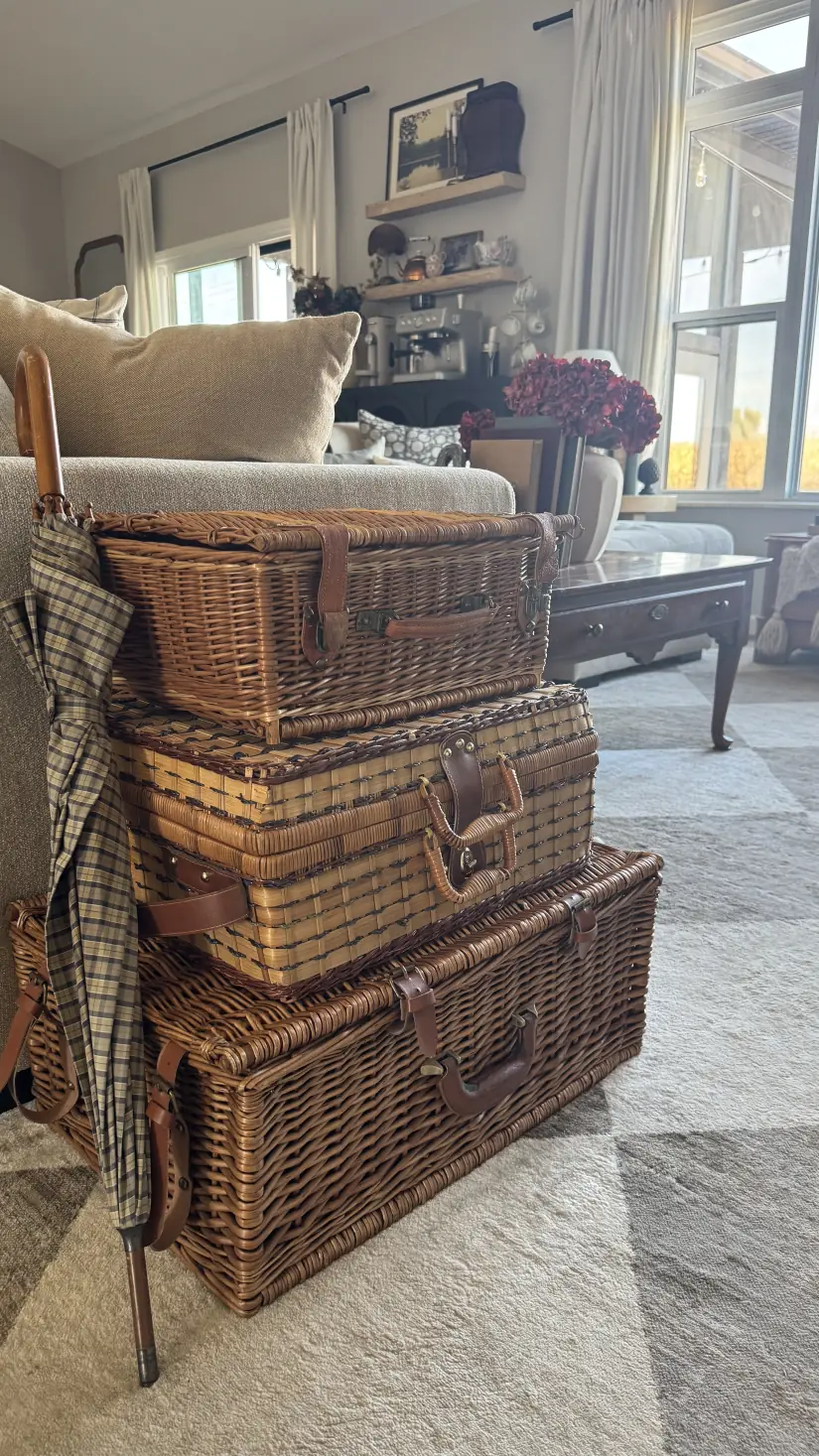
You bought the house. Now comes the part where you actually have to make it feel like your house.
And one of the biggest things I tell people—whether we’re talking about a home they just bought or simply a room they’re ready to refresh—is this:
Never buy the matching set.
Never.
The matching living room set. The matching bedroom set. The matching coffee table, end tables and console. The matching lamps on matching nightstands.
You do not need every piece in your home to come from the same collection for it to work together. In fact, I think the rooms that feel the most interesting usually have pieces that came from completely different places.
Buy the new couch.
Thrift the coffee table.
Keep the dresser you already own.
Find the weird little side table on Facebook Marketplace.
Bring home the $8 piece of art from Goodwill because you couldn’t stop thinking about it.
A beautiful home does not have to mean spending thousands and thousands of dollars. Sometimes it just means being willing to take a little longer to find the right things.
Here are five ways I approach it.
1. Never Buy the Matching Set
Yes, I’m saying it again.
If you take one thing away from this post, let it be this.
When every piece of furniture has the exact same finish, shape, style and detailing, your eye has nothing to explore. Everything starts blending together.
Instead, let things coordinate without matching.
If you’re buying a new sofa, maybe the coffee table is vintage.
If you already have a wood dining table, your chairs don’t necessarily have to be the matching ones that came with it.
Your nightstands don’t even have to match each other.
The goal isn’t to make every piece look like it was designed together. The goal is to make the room feel good together.
And if you just bought a house, this is also your permission slip not to run out and buy an entire house worth of matching furniture just because you suddenly have more rooms to fill.
2. Spend on Some Pieces. Search for the Rest.
I’m absolutely not against buying new things.
Sometimes the new couch is exactly what you need. There are pieces where comfort, size, function or longevity matter enough that buying new makes complete sense.
But that doesn’t mean everything else in the room has to be new too.
One of my favorite combinations is a beautiful new sofa paired with an old wood coffee table that has scratches, character and a shape you aren’t going to see in every other living room.
And you don’t have to spend thousands to find those pieces.
Search Facebook Marketplace. Walk through Goodwill or Savers. Stop at Salvation Army. Go to garage and estate sales. Spend an afternoon walking around an antique mall.
Sometimes you find nothing. Sometimes you find the exact piece your room has been missing for $25.
That’s part of it.
3. Look for the Things You Won’t See in Everyone Else’s House
This is what makes a room interesting.
It isn’t necessarily the most expensive piece in the room.
It’s usually the thing someone notices and asks, “Where did you find that?”
Maybe it’s an old painting.
A marble side table.
A vintage lamp.
An antique cabinet.
A strange little brass object that you aren’t even entirely sure what its original purpose was.
Those pieces give your home personality because you can’t simply walk into a store and recreate the entire room.
And I think this is especially important when you’ve just moved. You don’t have to completely transform the house before it starts feeling like yours. Sometimes adding one or two really interesting pieces changes the entire feeling of a room.
4. Layer Pattern, Color and Texture
A collected room shouldn’t feel flat.
This is where layering makes such a difference.
Mix the floral pillow with the striped one.
Put the aged wood table next to the clean upholstered sofa.
Layer linen, velvet, woven textures, worn wood, smooth stone, brass and glass.
Bring in different shades of the same color instead of trying to make every single thing perfectly match.
Pattern doesn’t have to match either. A stripe can live next to a floral. A small-scale pattern can work with something larger and bolder.
The key is giving your eye something to move around and discover.
A home feels collected when you can tell different pieces were added over time—not when everything looks like it arrived in the same delivery truck.
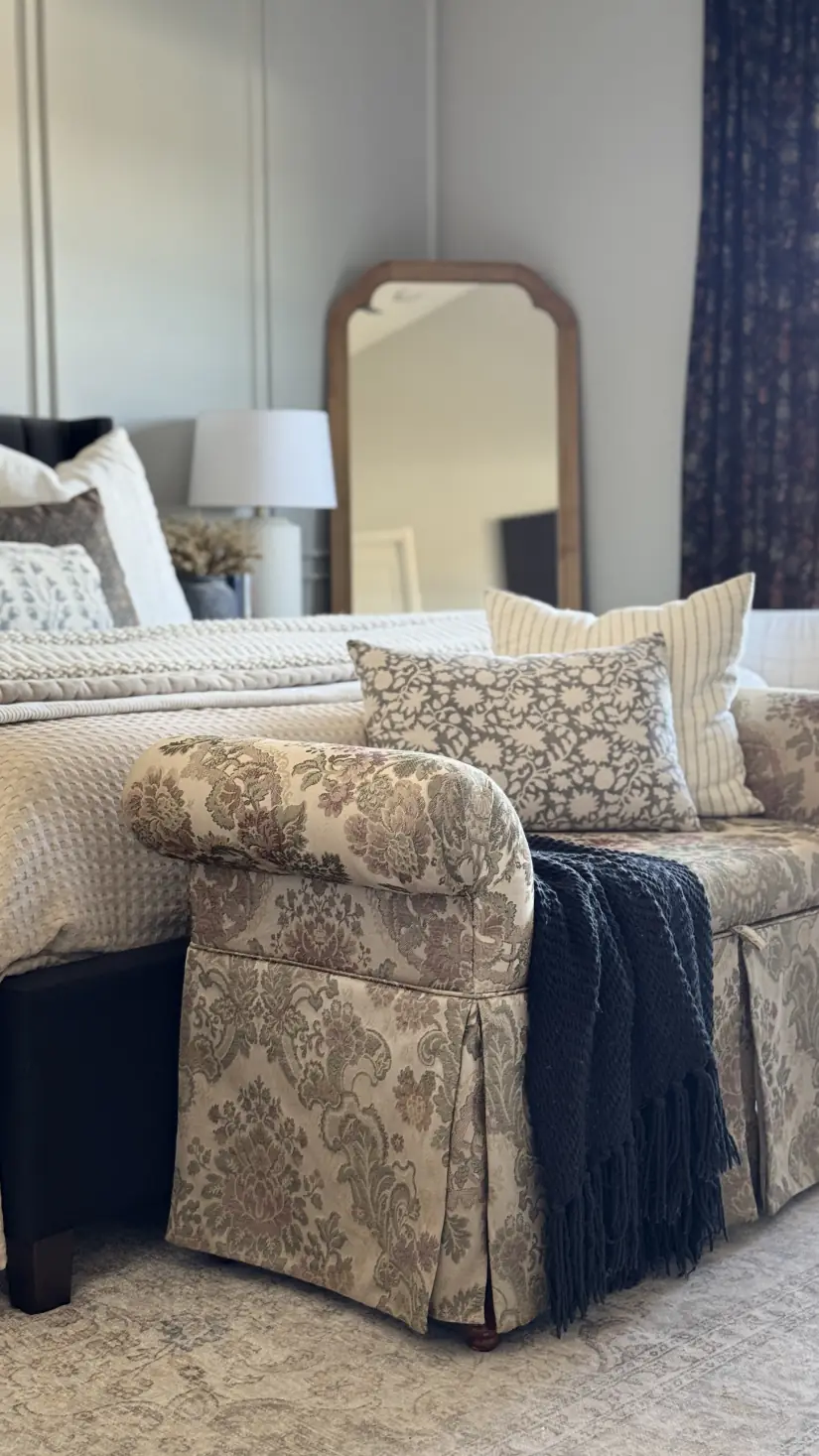
5. Mix Your Metals and Your Wood Tones
Your metals do not all have to match.
A room can have brass, silver and black.
In fact, I think it should.
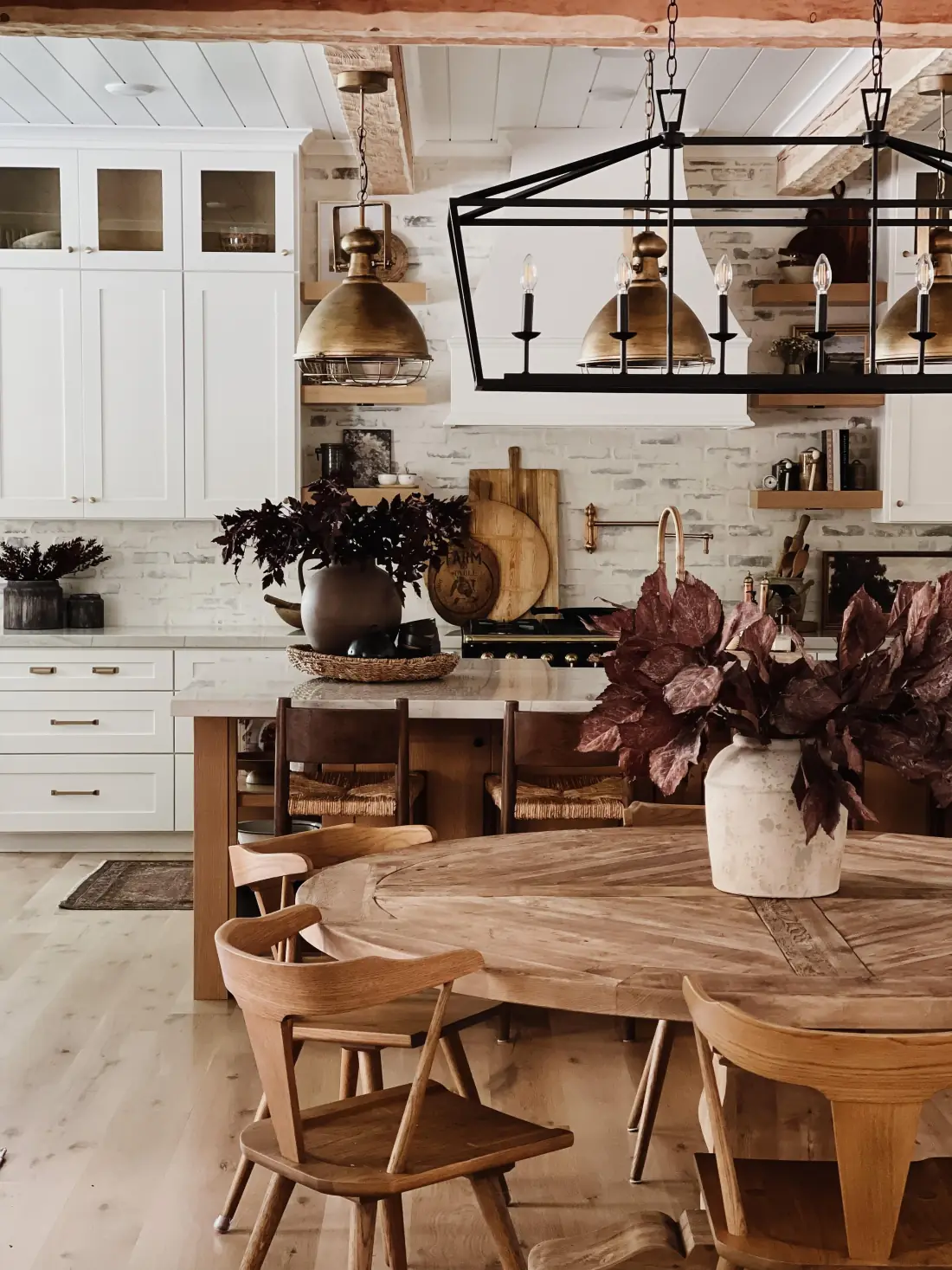
Mixed metals make a space feel like it has evolved over time. Maybe you have an old brass lamp, black hardware, a silver frame and an antique piece with aged metal detailing.
That’s not a problem you need to fix.
That’s character.
The same goes for wood.
Your hardwood floors do not have to perfectly match your dining table.
Your dining table does not have to match your coffee table.
And your side table doesn’t need to match either one.
You can have a darker antique wood piece next to a lighter wood floor. You can mix warmer and deeper tones. You can put an old piece with visible wear next to something newer.
And please don’t feel like every piece of wood needs to be stripped, refinished or made to look brand-new.
Patina tells a story.
The scratches, worn edges and variations in an older piece are often the exact reason I like it in the first place.
Instead of trying to perfectly match every wood tone and metal finish in a room, look at the space as a whole.
Different finishes give a room depth.
Perfectly matching everything can take that depth away.
The Best Homes Take Time
If you just bought a home, there is so much pressure to immediately make every room feel finished.
You see the empty corner.
The blank wall.
The room that still needs a rug.
And suddenly you’re trying to furnish an entire house in a weekend.
Don’t.
Leave the corner empty until you find the right piece.
Wait for the Facebook Marketplace table you actually love.
Walk through the antique mall three times without buying anything.
Use the furniture you already own in a different way.
Bring home the weird $10 thrift-store find that you can’t stop thinking about.
Your house doesn’t have to be finished the day you get the keys.
Honestly, I don’t think a home should ever really feel finished.
It should change as you do.
The best homes aren’t the ones where everything matches or where every piece was expensive. They’re the ones that make you want to walk around and ask:
“Where did you find that?”
So buy the new couch.
Thrift the coffee table.
Mix your woods. Mix your metals. Layer the patterns and textures.
And please—
never buy the matching set.
If you want a little more inspiration while you let your rooms evolve, read How to Make Your Home Feel Collected, Not Cookie-Cutter. And if you are still looking for the house you will make your own, start your Metro East home search with me or call me at (618) 866-2096.
Your move can start with one conversation